AI-Native Workforce Dispatching: The Future of Field Operations for Contractors
Posted on February 26, 2026
AI-Native Workforce Dispatching: The Future of Field Operations for Trade Contractors
How specialty contractors are moving beyond spreadsheets and tribal knowledge to optimize crew deployment in real time.
The Dispatching Problem Costing Contractors Millions
Every day, operations leaders at large HVAC, electrical, and mechanical contractors face the same challenge: getting the right workers to the right job sites at the right time.
Most still rely on whiteboards, spreadsheets, and a dispatcher's memory. The result?
Skilled technicians sitting idle while other sites are short-staffed
Senior workers deployed to jobs that don't require their expertise
Travel time eating into billable hours
Overtime costs spiraling when mismatches cause delays
For contractors with 100+ field workers across multiple job sites, these inefficiencies add up to millions in lost productivity annually.
What Is AI-Native Workforce Dispatching?
AI-native workforce dispatching is fundamentally different from bolting automation onto legacy scheduling tools. Instead of digitizing existing manual processes, it reimagines dispatching from the ground up using three core capabilities:
1. Real-Time Capacity Visibility
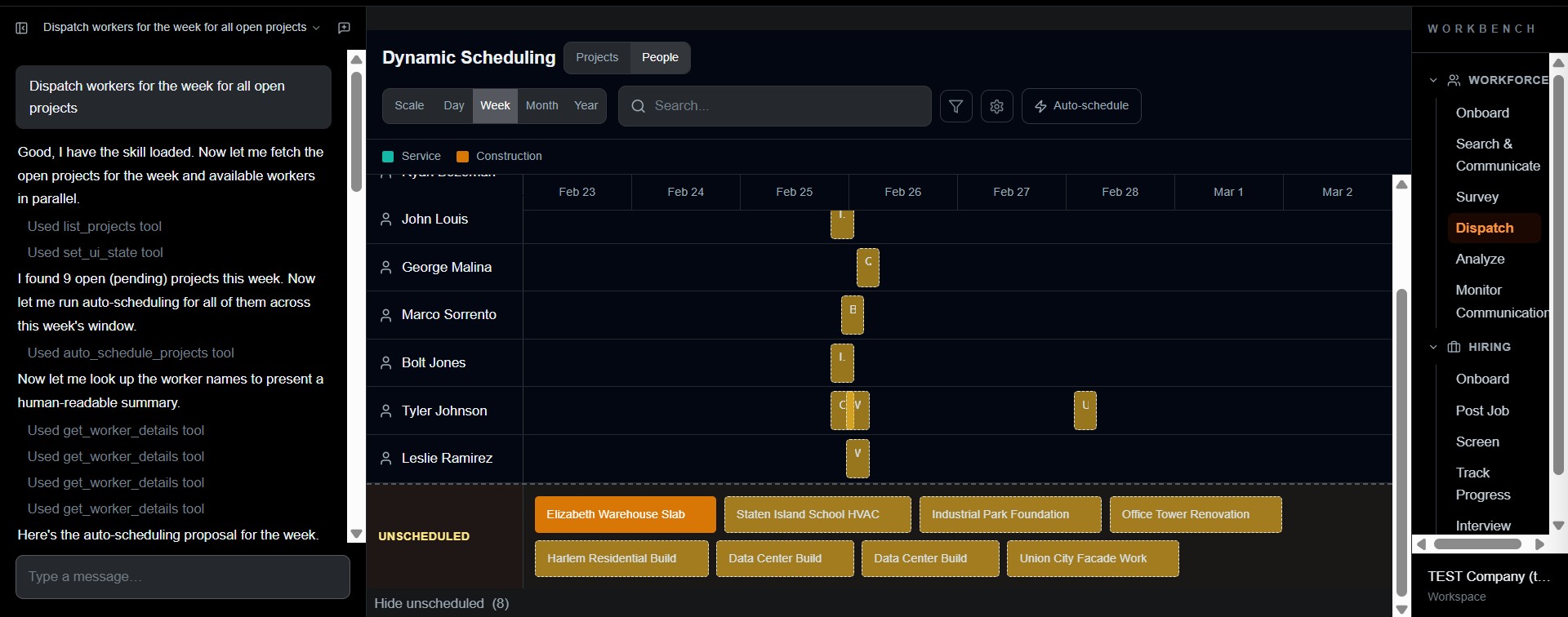
Traditional dispatching relies on outdated information—yesterday's schedule, last week's availability. AI-native systems maintain a live workforce graph that shows exactly who's available, where they are, and when they'll be free.
2. Intelligent Skills Matching
Not all technicians are interchangeable. AI-native dispatching automatically matches worker certifications, experience levels, and specializations to project requirements—ensuring a journeyman electrician isn't sent to a job requiring a master.
3. Predictive Optimization
Rather than reacting to problems, AI-native systems anticipate them. They forecast labor needs based on project timelines, weather, and historical patterns—then recommend deployments that minimize travel time and maximize utilization.
Why "AI-Native" Matters
Many workforce management tools claim to use AI, but there's a critical difference between AI-assisted and AI-native:
AI-Assisted | AI-Native |
Adds suggestions to manual workflows | Automates decisions with human oversight |
Requires clean, structured data input | Works with messy, real-world information |
Desktop-first, office-centric | Field-first, works via voice and SMS |
Retrofitted onto legacy architecture | Built from scratch for intelligent allocation |
For trade contractors, this distinction matters because field operations don't happen in front of a computer. An AI-native system meets crews where they work—on job sites, in trucks, via text message.
The ROI of Intelligent Dispatching
Contractors who adopt AI-native dispatching typically see measurable improvements within the first quarter:
Reduction in overtime costs
through better initial allocation
Improvement in workforce utilization
by eliminating idle time
Faster response to urgent requests
with real-time visibility into available crews
Reduced administrative burden
for dispatchers and operations coordinators
Perhaps more importantly, operations teams can finally scale. Adding new job sites or handling growth spurts no longer requires proportional increases in coordination headcount.
Common Concerns (And Why They're Overblown)
"Our crews won't adopt new technology"
AI-native systems designed for the trades meet workers where they are. That means SMS-based communication, voice interfaces, and zero app downloads required. If a technician can send a text, they can use the system.
"Our data is a mess"
Unlike legacy tools that demand perfectly structured inputs, AI-native systems are built to handle incomplete information. They learn from patterns and improve over time—even if your current "system" is a spreadsheet with missing cells.
"We've tried workforce software before and it failed"
Most workforce management tools were designed for office workers or retail scheduling. They don't account for the realities of trade work: variable job durations, credential requirements, multi-site coordination, and crews that don't sit at desks.
Getting Started With AI-Native Dispatching
The shift to intelligent workforce allocation doesn't require a massive IT project. Modern AI-native platforms are designed to:
Integrate with existing systems
— HRIS, project management, and ERP connections mean no data migration required
Deploy incrementally
— Start with a single division or geography, then expand
Show value quickly
— Real-time visibility delivers ROI before full optimization kicks in
The Bottom Line
Specialty contractors can't afford to keep dispatching the way they did twenty years ago. Labor is too expensive, margins are too tight, and competition is too fierce.
AI-native workforce dispatching isn't about replacing experienced operations leaders—it's about giving them superpowers. Real-time visibility. Intelligent matching. Predictive optimization. All accessible from the field, not just the office.
The contractors who figure this out first will have a structural advantage in winning and executing projects. The rest will keep losing money to spreadsheets.
Ready to see what AI-native dispatching looks like for your operation? Book a demo to see Forge in action or learn more here.
Your workers won't use software that slows them down. Gild meets them where they are—via text and voice.